My very first year of being an author, I visited countless schools for author’s visits.
(Shameless self-promotion is the name of the game for middle grade authors like
myself.) I would always end my presentation with a question-and-answer session for the
students, and without fail, I always received the same question. Where do you get
your ideas? Now for a while, this question baffled me. I get my ideas the same place
everyone else does, right? I mean, there is no magical well full of good ideas authors
shlep to with a bucket or a fairy living under our kitchen sink whispering sweet nothings
to us while we wash the dishes. (*there isn’t one under MY sink at least, which is a
crying shame.) I was a bit stumped about how to answer this question, so I dodged it
for almost a year.

It wasn’t until the following summer that it finally clicked how ideas
worked, and I figured it out while watching my kids catch lightening bugs.
Catching lightening bugs has always been a core memory thing for me. I
remember running around with an empty peanut butter jar with my cousins in the
summer, and I knew that I wanted that experience for my kids. The problem is that it
doesn’t get dark in the summer in Indiana until ten o’clock at night! That’s LATE for little
people! (It’s even later for those of us who just need a break from said little people, but I
digress…) I bit the bullet one night and let my two oldest stay up past their bedtime to
catch lightening bugs.

I gave them each a jar and sent them on their way. That’s when it
all fell apart. They chased after the bugs without catching a single one. Someone fell
and skinned a knee. There was a lot of snot, some whining, tears, and general
mayhem. It was in that moment that I had the epiphany that there was, in fact, a
technique to catching lightening bugs, and I was going to have to teach it to my kids.
If you spent your childhood correctly, you too know this technique. It is as follows:
Step One: Spot the flash of a lightening bug.
Step Two: Don’t, under any circumstances, look away. If you do that bug with
disappear into the night NEVER to be seen again. Weird but true fact.
Step Three: RUN as fast as you can towards the bug you spotted. Remember, do NOT
look away.
Step Four: Get your hand around the bug. GENTLY!
Step Five: Open jar and pop bug inside. If you already have some bugs in there, give
that lid a sharp tap to send all bugs careening to the bottom of the jar so they don’t
escape. This isn’t exactly great for the bug’s well-being, but neither is getting caught, so
it’s a wash.
Now. You have caught a lightening bug.

As I watched my kids finally having some success, I realized that THIS was how ideas
worked. Ideas, or as I like to call them, what ifs, pop into your head at the oddest
moments, and, like lightening bugs, if you don’t find a way to capture them, they are gone forever. Never to be seen again.
Kids are the perfect what if age. They think up fifty wonky what if ideas a day. Adults? We, unfortunately, get boring in our old age. I’m not sure if it’s because our brains are full of our kid’s sports schedules or our grocery list, but we are LUCKY if we
get one or two ideas a month. Although, unless you took the time to capture those ideas, you probably don’t even remember that they happened. And those fifty ideas your kid thought up today? He probably couldn’t even tell you one by bedtime.
It turns out that while our brains are FANTASTIC places for coming up with
ideas, they are HORRIBLE places for storing them. Our biology is wired to help us
remember things prevalent to our survival, and that wonky story idea just isn’t prevalent.

Case in point: I had the idea for my Edge of Extinction novels on fall break in New York
City. I spotted a tiny dinosaur replica roughly the size of a golden retriever in a glass
case, and I had an idea. What if dinosaurs came out of extinction? Would we have
these as pets someday? I pulled out my phone and snapped a picture to remind myself
of the idea. Six months later I stumbled across that photograph while working to free up
some memory from my cellphone, and chapter one of Edge of Extinction found its way
onto a page. I never would have sat down six months after having the idea and
remembered it. That’s just not how our brains work.

I had the idea for Hoax for Hire in the middle of teaching a seventh-grade language arts class. I paused the class to write it down in the margins of my teacher’s planner. Five years later, when I was trying to
come up with my next book, I found that piece of paper in my idea file.

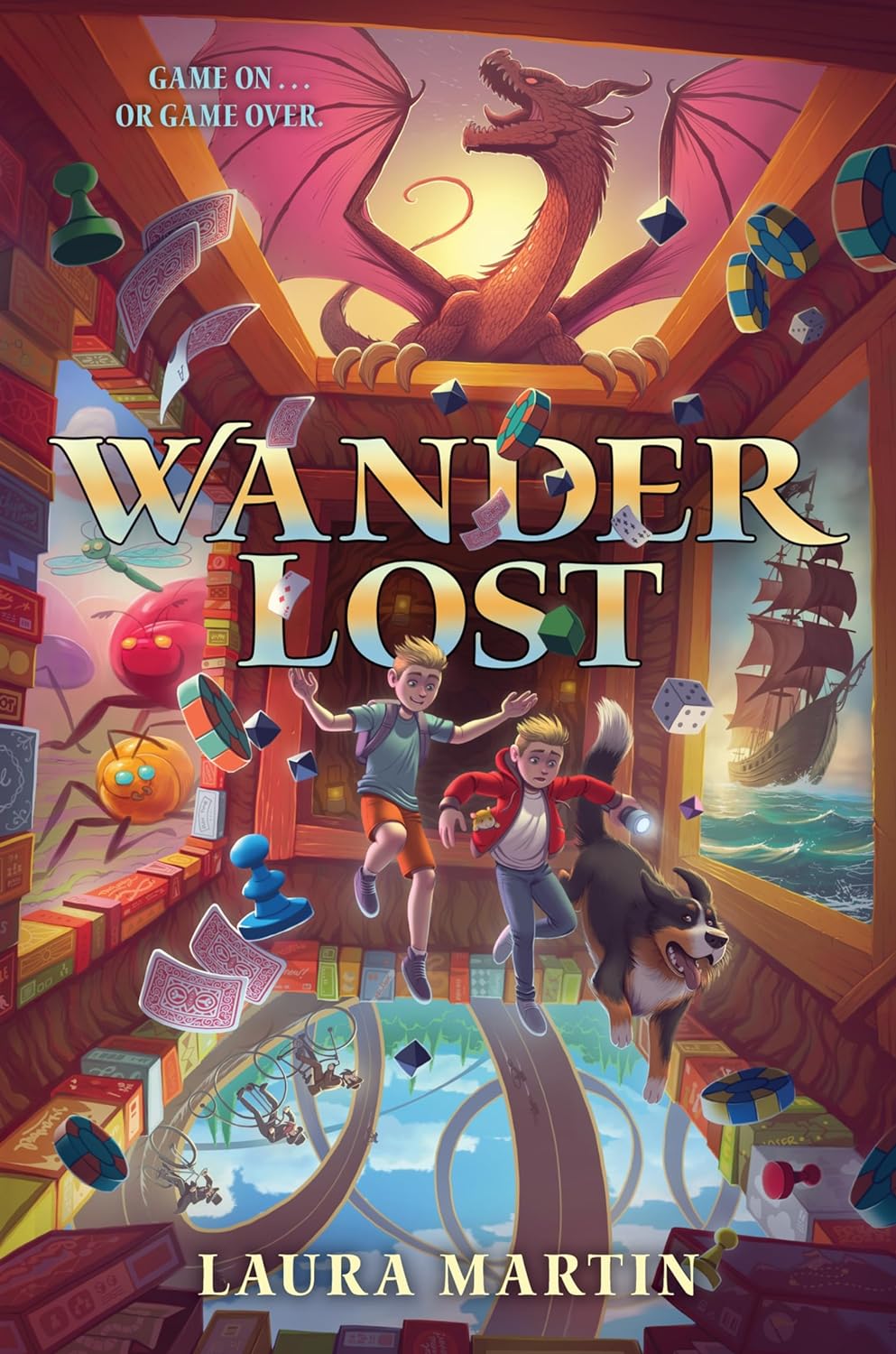
I wondered
what would happen to a family with a board game curse that let them fall in and out of
board games while driving through downtown Zionsville, and I made a note in the notes
ap of my phone. That idea would later become my book Wander Lost.
So, what does this mean? It means that youneed to start paying attention to
those wonky, weird, wonderful ideas that pop into your brain, because you never know if
it’s THAT idea that would have completely changed the trajectory of your life. If you’d
told me that I’d FINALLY get published by writing a book about dinosaurs in Indiana, I’d
never have believed you. Life has a lovely way of surprising us with ideas that we never
even saw coming, and it’s our job to pay attention and capture them.

*This analogy works GREAT in Indiana. Go somewhere without lightening bugs, and it
falls a bit flat. It’s hard to explain to someone how much fun catching a glowing bug can
be if they’ve never done it.
*I once had someone who’d never seen a lightening bug marvel that they looked like
tiny UFO’s flying over the cornfields, and I can never un-see it. And now, you can’t
either. You’re welcome.

 lauramartinbooks